
Precision health depends on tools that detect risk earlier and explain why some people experience worse outcomes than others. NYU Meyers researchers in this area are developing open-source statistical genetics software used by large biobank studies worldwide and deep-learning approaches to brain imaging genetics in Alzheimer's disease; using blood gene-expression profiles to estimate circadian timing and inform sleep-based diabetes prevention; and identifying gut microbiome, epigenetic, and biological aging signatures linked to fatigue in rectal and prostate cancer, depression among women living with or at risk for HIV, and cognitive decline among older adults with periodontal disease. Others are uncovering the biobehavioral mechanisms of cancer-related cognitive impairment among women receiving breast cancer treatment and testing stress-reduction strategies to address it. Critically, this work connects molecular measurement to patients' lived experience and to social and structural context, including among Hispanic, Black, and Asian American and immigrant communities, building the evidence base for earlier detection, more precise risk prediction, and interventions that reach the populations most affected.
Explore recent publications, peer-reviewed articles, books, and ongoing research projects from our faculty, listed below in alphabetical order.

Han Chen, PhD
Dr. Chen has developed computational methods and widely used open-source software, including GMMAT, MAGEE, and GEM (with collaborators), to analyze large-scale genetic datasets and identify how genetic variation and environmental exposures jointly contribute to disease. These tools support research on cardiometabolic conditions, neurodegenerative disorders, and population health across diverse ancestral groups, and scale to biobanks with millions of participants. He is also developing identity-by-descent mapping methods for Alzheimer's disease and related brain imaging phenotypes derived from deep learning.
Recent Publications and Presentations
Unsupervised Deep Representation Learning Enables Phenotype Discovery for Genetic Association Studies of Brain Imaging. Patel K, et al. Communications Biology, 2024. Deep-learning-derived brain MRI phenotypes identified 97 genetic loci, including 26 not detected with conventional imaging measures.
GEM: Scalable and Flexible Gene-Environment Interaction Analysis in Millions of Samples. Westerman KE, et al. Bioinformatics, 2021. Introduces GEM software for biobank-scale gene-environment interaction testing.
Labs, Programs, and Websites: GMMAT on GitHub · GEM on GitHub · MAGEE on CRAN · Alzheimer's IBD Mapping Project · NYU Meyers Faculty Profile
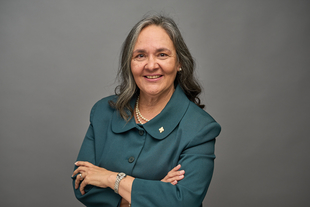
Velda González-Mercado, PhD
Dr. González-Mercado is investigating how the gut microbiome and multi-omic markers, including gene expression, epigenetic, and predicted metabolic pathways, influence cancer-related symptoms such as fatigue and gastrointestinal distress. Her NIH-funded research examines the mTOR pathway in radiotherapy-related fatigue and the role of diet and social determinants of health among people with rectal and prostate cancer. By integrating molecular measurements with patient-reported outcomes, her work aims to identify biological signatures that support earlier symptom identification and more personalized supportive care, with particular attention to Hispanic and Puerto Rican patients.
Recent Publications and Presentations
- Dietary Quality and Microbiome Profiles Among Rectal Cancer Patients: A Cross-Sectional Pilot Study. González-Mercado VJ, et al. Puerto Rico Health Sciences Journal, 2026. Gut bacteria and predicted B-vitamin production pathways were associated with diet quality among rectal cancer patients.
- Insights From Bacterial 16S rRNA Gene Into Bacterial Genera and Predicted Metabolic Pathways Associated With Stool Consistency in Rectal Cancer Patients. González-Mercado VJ, et al. Biological Research for Nursing, 2023. Looser stools during chemoradiation were associated with specific bacterial genera and predicted metabolic pathways.
Labs, Programs, and Websites: MTOR Pathway in Radiotherapy-Related Fatigue Project · NYU Meyers Faculty Profile

Susan Kohl Malone, PhD, RN
Dr. Malone is advancing biomolecular approaches to measuring circadian rhythms and understanding how sleep and circadian timing affect metabolic health. Her pilot research has examined whether blood gene-expression profiles can estimate circadian timing (dim light melatonin onset) and how those estimates relate to sleep timing and chronotype. She is also testing sleep extension and circadian strategies to strengthen diabetes prevention, and has evaluated how automated insulin delivery technology affects sleep in adults with type 1 diabetes.
Recent Publications and Presentations
- Association Between Dim Light Melatonin Onset Predicted From Gene Expression Profiles With Sleep Time and Chronotype Preference: A Pilot Study. Malone SK, et al. Chronobiology International, 2025. A pilot study linking gene-expression-predicted circadian timing to sleep timing and chronotype.
- Prolonged Use of an Automated Insulin Delivery System Improves Sleep in Long-Standing Type 1 Diabetes Complicated by Impaired Awareness of Hypoglycemia. Malone SK, et al. Journal of Diabetes Science and Technology, 2024. In a small sample (n=8) followed for 18 months, automated insulin delivery shortened sleep onset and reduced nighttime waking.
- Sleep Health and Metabolic Outcomes: Enhancing Diabetes Prevention Programs Through Evidence-Based Sleep Interventions. Recorded webcast, Clinical Directors Network, November 2025.
In the News
- Being Lonely Can Affect How Well You Sleep, and Vice Versa (Sleep.com, January 2024)
Labs, Programs, and Websites: NYU Meyers Faculty Profile

John Merriman, PhD, RN
Dr. Merriman is investigating biobehavioral mechanisms underlying cognitive symptoms during and after cancer treatment. His current research compares Mindfulness-Based Stress Reduction with a health enhancement program to improve cognitive function among postmenopausal women receiving aromatase inhibitor therapy for breast cancer, and examines how stress biology and social determinants of health shape intervention response. These findings are helping identify targets for interventions that preserve cognitive and functional health and improve survivorship outcomes.
Recent Publications and Presentations
- Role Function in Postmenopausal Women During Aromatase Inhibitor Therapy for Breast Cancer. Melnyk H, et al. Journal of Cancer Survivorship, 2024. Women treated with chemotherapy plus anastrozole had roughly twice the physical role limitations of women on anastrozole alone.
Labs, Programs, and Websites: NYU Meyers Faculty Profile

Nicole Beaulieu Perez, PhD, RN
Dr. Perez is investigating epigenetic, inflammatory, and gut microbiome markers associated with depression, particularly among women living with or at risk for HIV, women with type 2 diabetes, and Black women. Her recent work found that accelerated epigenetic aging in immune cells was linked to mood and cognitive symptoms of depression, a finding that points toward blood-based markers for earlier and more precise depression assessment. Her NIMHD-funded research examines how poverty, depression, and metabolic health intersect.
Recent Publications and Presentations
- Monocyte Epigenetic Age Acceleration Is Linked to Non-Somatic Depressive Symptoms in Women With and Without HIV. Perez NB, et al. Journals of Gerontology, Series A, 2026. Among women in the Women's Interagency HIV Study, faster monocyte epigenetic aging was associated with mood and cognitive, but not somatic, depressive symptoms.
- Selecting a Depression Measure for Research: A Critical Examination of Five Common Self-Report Scales. Perez NB, et al. Journal of Affective Disorders, 2026. Only PROMIS-D rated acceptable or better on every COSMIN measurement property.
In the News
- A Blood Test Could Help Spot Depression Earlier (Technology Networks, May 2026)
- Monocyte Epigenetic Age Links to Depression Symptom Subtypes, With Nicole Perez, PhD (HCPLive, May 2026)
Labs, Programs, and Websites: NYU Meyers Faculty Profile

Xiang Qi, PhD, RN
Dr. Qi applies causal inference and advanced analytic methods to large national cohorts, including NHANES, the Health and Retirement Study, and the Baltimore Longitudinal Study of Aging, to identify modifiable risk factors for dementia and cognitive decline. His research has positioned oral health as a modifiable dementia risk factor, showing that periodontal disease is linked to accelerated biological aging and poorer cognition and that gum treatment is associated with lower dementia incidence. He also examines dementia caregiving and cognitive aging disparities among Asian American and immigrant older adults.
Recent Publications and Presentations
- Accelerated Biological Aging Mediates the Association Between Periodontal Disease and Cognitive Function in Older Adults. Qi X, et al. Innovation in Aging, 2025. Periodontitis was linked to lower cognitive scores among adults 60 and older, with accelerated biological aging explaining part of the association.
- Association of Gum Treatment With Cognitive Decline and Dementia Risk Among Older Adults With Periodontal Symptoms: A 12-Year Prospective Cohort Study. Qi X, et al. Neuroepidemiology, 2025. Older adults who received gum treatment had slower cognitive decline and 38% lower dementia incidence.
In the News
- The Mouth-Mind Connection: How Genetic Risk and Oral Health Together Shape Dementia (NYU Shanghai News, August 2026)
- NYU Researchers Urge Adding Oral Health as a 'Significant' Dementia Risk Factor (Oral Health, February 2025)
Labs, Programs, and Websites: NYU Meyers Faculty Profile